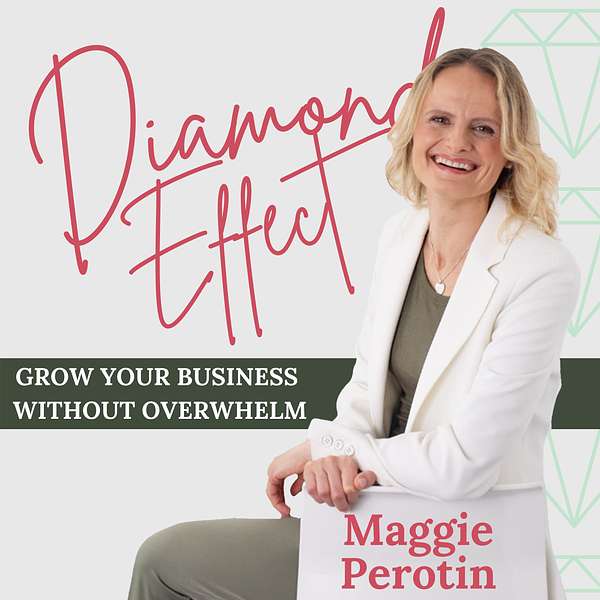
Diamond Effect - Strategies to Scale Your Service Business as a Sellable Asset

EP # 200 - From Zero to Consistent Gigs: Growing a Music Business While Working Full-Time and Raising a Family with Jay RK

Maggie Perotin Episode 200

Use Left/Right to seek, Home/End to jump to start or end. Hold shift to jump forward or backward.

0:00 | 32:51

🎉 Celebrating 200 Episodes of Diamond Effect Podcast!

In this special milestone episode, host Maggie Perotin interviews her husband, JF Perotin (stage name - Jay RK), a musician and performer who successfully built his entertainment business while maintaining a full-time career and also prioritizing family life.

Key Discussion Points:

🎸 Building a Creative Business (0:00-5:00)

  • Starting from zero network as an immigrant entrepreneur
  • Evolution from YouTube channel to live performances
  • Growing from one monthly gig to regular weekly bookings
  • Innovative approach to audience engagement through QR code song requests

💼 Business Growth Strategies (5:00-13:00)

  • Effective venue outreach and follow-up techniques
  • Building relationships with venues and private event clients
  • Balancing multiple revenue streams (bars/restaurants vs. private events)
  • Using creativity as a business advantage

⚖️ Work-Life Integration (13:00-19:00)

  • Managing a side business while working full-time
  • Starting small with realistic commitments
  • Prioritizing without sacrificing quality
  • The importance of having a supportive partner

❤️ Relationship Dynamics (19:00-24:00)

  • Supporting each other's entrepreneurial journeys
  • Maintaining open communication
  • Creating habits for staying connected (daily walks)
  • Building trust through consistency

👨‍👩‍👧‍👦 Parenting & Business (24:00-31:00)

  • Nurturing relationships in a blended family
  • Showing authenticity as a parent-entrepreneur
  • Connecting with children through shared interests
  • Maintaining consistency while being available

🎵 Where to Find JF's Music:

  • Streaming platforms: Search for "Rockin Krolik" (K-R-O-L-I-K)
    Spotify - https://open.spotify.com/artist/2geMzqZhDmDnfcUIANhOyx
    Apple Music - https://music.apple.com/us/artist/the-rockin-krolik/1449242861
  • YouTube: @therockinkrolik
  • Live performances: Greater Toronto Area

💡 Key Takeaways:

  1. Start small and build gradually
  2. Maintain consistent follow-up with potential clients
  3. Create systems for balancing multiple priorities
  4. Stay authentic in both business and family life
  5. Keep communication channels open with your support system

🎯 Action Steps for Creative Entrepreneurs:

  • Begin with manageable commitments
  • Document your progress
  • Create follow-up systems
  • Build support networks
  • Establish communication routines

Connect with JF:
https://www.therockinkrolik.com/

IG - https://www.instagram.com/therockinkrolik/

Connect with Maggie:
https://www.stairwaytoleadership.com/

IG - https://www.instagram.com/maggie.perotin.s2l/

LinedIn - https://www.linkedin.com/in/maggie-perotin-business-and-leadership-coach/

#DiamondEffectPodcast #CreativeBusiness #Entrepreneurship #WorkLifeBalance #FamilyBusiness #MusicBusiness #SideHustle #BusinessGrowth

Audio Only - All Participants: Welcome to Diamond Effect podcast, Episode 200. We're celebrating 200 weeks of Diamond Effect Podcast, and for this special episode, I have even more special guests, JF Otten, who is also my husband. But jf, you're so much more than my husband, so please introduce yourself to everybody.

Yes. Okay. I am your husband. Very proud husband, and, but I'm also, yeah, I'm I'm an artist. I'm a musician, singer, songwriter and a performer. I play the guitar and I sing and as much as possible. Great. Yes. And we love it. So everybody, we're gonna talk a little bit about everything.

Today. We will talk about running a creative musical business because. Jeff, that's what you do, especially as a side hustle, even though it's a main thing, right? That's a main [00:01:00] identity that the performer and the artist. But we'll also talk about relationship because I do think our relationship is special and we don't talk about it that much.

So it's time we talk about and parenting. We have four kids, so hey, there's our big part of our relationship is parenting, so we'll talk about that too. Are you ready? That's great. Yeah. What's to talk about? Yeah, I know. Okay, so let's start with your performing and artist business and passion. And, just like I, I remember when you started, we're both immigrants.

So it's not like when we started our ventures, we had a lot of network or even like friends from high school who would be like, yeah, I'm gonna come out and listen to you. I'm gonna come out to your first performance. We didn't have that. Tell everybody a little bit of a history of how you grew from.

I have nobody, I don't know anybody, but I do wanna perform to where you are. Yeah. One of the first things I [00:02:00] did, I was writing songs and I started with a YouTube channel just thinking, okay, I'll go public with some of the stuff that I do, and then I found other musicians through, open mics. And then, I had an ad to find musicians on Ki G here and I found Mark a guitar player. We decided to start something like a duo and perform together.

So that kind of got me within, I would say. Within three, four years. From, picking the guitar up again after, the kids were out of the very baby stage. It allowed me to. Get back in the game a bit, and then, it evolved from, the dynamic that we have as the family and it really started as, okay, how much time can we allow for this to happen? So it was usually, one night a week for a practice. And then, after practicing for a while, we, okay, we can do one gig a month.

So tell everybody where you're at now, right? Because you don't do doo [00:03:00] with Mark anymore. You're predominantly solo. Now you have another Doo but that's a little bit, right? But let's just say how it evolved from, that one giga month to what it's in.

So first and foremost, it goes with experience and the fact that, you get your foot in the door. You perform somewhere and then it allows you to say, Hey, I performed there. Can I perform here now? And you knock on doors and, try to sell your act.

Really. And then lots of doors actually to this day, even venues that have been trying to get in back in 2017 are still not wanting me. But, it's also the fact that. You gotta accept that you're not a fit everywhere, and find the right venues for you.

So there's a lot of, knocking on doors, sending emails phone calls, mostly emails, though. I don't usually call venues. But then also I'm on a platform. Where I'm able to book mostly [00:04:00] private events, private gigs. So that really helped a lot, but it's really two different streams.

There's the bar, restaurant pub type of stream, and there's the private events, corporate events backyard parties type of stream through that platform. And both snowballed, yeah. They did. I, and I've seen that myself, over the years. How many years has it been?

I don't even remember. Five, six years. Yeah, maybe. Maybe. So like over the years, starting from no gigs to now two, three things that weekend. Most of the weekends, I think. Yeah. I mean there was, yeah, I would say there's definitely average one. One a weekend. Throughout the free average throughout the year.

It's one a one a week. So what I wanted to ask you specifically, because you mentioned that you're pretty good at reaching out to the venues, right? The private, as you say, the private gigs happen mostly through gig salad and then [00:05:00] recommendations and people just coming back to you, right?

Yeah. But in terms of the venues and. Bars and restaurants, you reach out to them. Yes. Talk about, I wanna get into your mind and your mindset. What are you, what is your thinking when you're doing it? Because I've seen you, right? There's definitely a lot of follow ups and there's a lot of persistence.

You gotta be to do that because we talked about it not so long ago. Even one of the venues here locally took you quite a while to get in, and now they want you. On a regular basis. Yeah. But it wasn't an instant success with them, so No. Talk about that. What are your thoughts?

What allows you to keep going? Yes. First of all, it's figuring out where potentially you can fit. And you would be a good act for that specific venue. Like in the area, most like breweries, pubs and, bars that, they have. That have [00:06:00] live music.

I'm doing covers, right? So for most venues I'm okay, but then it's like you need to filter a bit, from, I. Feedback from other musicians. Really. Yeah. That's one thing. You get, you also get inspiration from other musicians, Hey, this person's performing there might be a good spot for me too.

Venues open on a regular basis. They also close and unfortunately on a regular basis. So there's a turnaround to, you need to adapt. But you gotta the mindset really is, when I send an email to a venue, first of all, you gotta talk to the right person.

End up with the right person. But it's also the fact that it's not their business. They're not in the business of booking. So it's, you gotta understand that you're, if you're not hitting them at the right moment, if they're not in front of the computer, or however they book, 'cause some are still like, manual calendar on, valleta type of board in the, in the staff room type of thing.

You gotta understand that, yeah, there, there's gonna be follow ups. You gotta be intentional [00:07:00] about where you want to perform and keep track of, when you send the email try to follow up, on the regular basis. But, it's, yeah, it's persistence is what you say.

It's patience. And once you get your foot in the door it's never a one battle in terms of you, you may have won their heart but you still haven't won them in terms of making sure that they're gonna respond timely to your email and that you won't have to follow up again.

It's just the name of the game really. No, there you go. So that's why I love it. It's the name of the game, right? If you wanna perform, you wanna book those clients, you just need to be prepared to go out there, follow up and not take it personally, because Yeah, they're busy, right? They're running restaurants, they're, I just said, let's go out there. I had to physically go too, right? So then I wanna ask, because you're very creative and I really think a lot of my clients are creative, but I really think that as a creative person, it actually helps you in business.

It helps you grow a business if you know how to [00:08:00] channel that and that those skills are transferable. So I wanna hear from you. How do you think your creativity helps you actually grow your business? The creativity is, it's one of, it is one of the thing where I also don't like mundanity and when it starts to be a little boring.

So it's I'm like always trying to either improve the act or find different ways of doing things. Just because I don't like. To be bored in a way, right? Or I need to offer something that's different. So there is the business aspect of it is working towards trying to offer something that's different from any other dude with a guitar and, but there is a natural need for me to try and reinvent myself or improve. And it's through different things.

The first thing is like with the technology whether it's like guitar effects or work on the sound of the act. And then one of the main thing that I do [00:09:00] is I have a I have a list now. We are all electronic on tablets. So I have a list that people can access through a QR code. And they can request songs the night off, on the spot. I get a notification on my tablet and then I can actually perform those songs in order that I'm receiving them.

Yeah. So at that point it's great for me because first of all, I don't have to think about the next song I'm gonna play. I'm playing actually entertaining people directly without trying to. I have to think, Hey, what is this person gonna like?

And I actually know that people requesting song are the ones that they want to hear. Another thing that I do. And the third thing that you've mentioned is I'm also working on a duo. So it takes me out of, being the main sort of, performer.

I'm still, I still get to be there, but it's a, in a very different format where I'm not, let's say the front person. And it's allowing me to develop some more skills in a way. So that's been great in terms of the creativity is definitely [00:10:00] helping with evolving.

And growing as an artist. So then let's talk about, again, growth of your business because you are running it. On the side in a way. You have a full-time job. We have busy lives just as a family, right? We're a blended family. Four kids at different ages, and of course they're growing now, but when you started, our youngest one was still.

Six years ago though, I've been in four. Four. Yeah. So different stages. So how were you able to do it while still, doing workouts and taking care of yourself and us finding time as a couple whenever we can, and still supporting the family? How were you able to do it? Because I'm sure there's a lot of people who are thinking like, oh, I would love to, turn my passion into some sort of business and side hustle, but I'm busy. I don't have time. So what is your advice on this? If you really want you'll find time for what you love to do.

I [00:11:00] think, it was 2017, so Jacob was really not even three yet. When I started performing, it was like two and a half. The first thing is it doesn't happen overnight, so it's really baby steps coming back to the, kids, one step at a time.

Don't try to bite more than you can chew. It was one practice a week and then one gig a month, I think building that progressively is also a great way to build a strong foundation.

Whatever you are, whatever you're gonna. Do, it doesn't matter, I think, what, whatever business you're in. But in, in my case, it really allowed me like to build the confidence build the skills. I've improved quite a lot over the years, obviously. Performing more and, gained confidence, added many songs to the set list and so on and so forth. Finding time. Then, I think one of, one of the main thing is you are supporting me also and allowing me to do what I love.

There's a balance there too, right? The support is [00:12:00] incredible. You're my number worth fan, but even without you being a fan of my music necessarily, I know that you would have my backs letting me. Go out to perform.

Yeah. And we'll go back to it because I think it's very important. Even you supporting me in my business. We'll park that and we'll talk about it in a second, but then one last thing I wanna ask you is about staying focused because you are creative. You do have a ton of ideas and music is not even the only art form that you could do.

You love sculpting Yes. And drawing. We have some of your drawings on our walls in the house. So there is even projects like the furniture right behind you is something you've created, you've done right? Oh yeah. Like you did it. So there's a lot that you can do.

So how do you stay focused and really prioritize while Yeah. Living a pretty full life with our family and work and [00:13:00] everything. Yeah. I think there was a moment definitely where I had to choose with, between all those different projects, passions, hobbies that I have even though they're still floating around in my head, there's, there, there are prayer, their priorities and the thing is, the choice that I made is okay with songwriting, with performing.

With the music, this is the hobby that checks most boxes for me. Performance being one, but also the creativity of writing songs, creativity, with the covers too. They're not, exactly what's being played on the CDs.

I had to make a choice and can leave things aside and actually focus on what is the most important. And building that business was also, the most important for me, it was not just, going in the basement and playing the guitar just to, to have fun.

It was like I wanted to have something that's is really me. And then, and it's, I'm a [00:14:00] musician. I'm an artist and I needed that to be more important than let's say my day job in my life. Or, at least as important. Not this thing that I do on the side of the desk.

We talked about it earlier, like the, I also need a full schedule to stay focused. If, like with the being busy at work during the day. Having gigs to prepare for and obviously our family life. I'm actually probably the best version of myself or the most efficient if I'm, back to the wall type of, full busy. I don't like to use busy schedule because that doesn't necessarily mean that you're really busy but let's say a full schedule with like from week to week and Yeah. If I don't have that, my mind starts to wander and I want to go in the garage and start painting stuff and sculpting wood and, collecting rocks and sticks.

Yeah. And the one thing that you said here that I wanna just. Point everybody's attention to, because [00:15:00] it's something I coach my clients very often is that when you place importance on something, it doesn't mean that you have to spend same amount of time as on other important things. Because sometimes we think that the amount of time we spend on something determines it's I importance, right?

But I can have my music business important and my. Job important and my family life important. That means I just prioritize them and I'm equally committed. But how the amount of time that I allocate to each of those things day to day or week to week, can change. Absolutely. Yeah. So on the weekend.

Most time goes to family and performing right during the week. Most time goes to work, but there are still certain parts of the day when you spend either, working out or with family or helping kids, or us spending time together or performing because you're treating those things [00:16:00] equally important.

Yeah, and I find it very. Important for people to understand the difference because sometimes we think oh, I don't have time because in my mind I need to allocate the same amount of time to my, let's say, side hustle than I would to my work. Otherwise, it's not important or important, I don't treat it like important or it's like separating that I think helps.

Yeah, absolutely. Awesome. Okay, so let's move on to relationships. And I do wanna talk about our relationship because I do think it's very special and we, yeah, we really never talk about it. Even I don't talk about it that much in, in, in my social media. I wouldn't have been in my business where I am without your support, without you having my back.

And I also know that's not as common, right? I have clients who don't always have that support around, from the [00:17:00] people closest to them and through coaching, I help them through it. So having you, having my back, is that additional benefit or advantage that I have that not everybody has.

So what do you think makes our relationship so special? I. First of all, that we have each other's back. That's for sure. And then, we're respectful of each other's passions and, and business in that case. But I know that your coaching business is also a passion, right?

It's not, it's very but you can't, I can't really explain how special it is without going back a few years where in a way I've known you as a manager my whole life, as long as I've known you. You've been in a managing position, coaching people.

And I've experienced your coaching firsthand. When I was an employee back back back in the day. I think, this [00:18:00] relationship is built on the fact that you have a proven track record of delivering on your promises or, how do they say that?

Walk the talk. Yeah. Yeah. The thing is, it's the consistency of doing. What you say you are gonna do. And with that, over years, whether we're, we were in a couple or not this comes to the fact that building trust. So if you're telling me, I'm going to study to do an MBA starting tomorrow, I'm gonna be Yeah, go for it.

100% trust in the fact that not only you're, that you're gonna succeed, right? That you're gonna do it and succeed. And the same with whatever you've undertaken and your business journey. You're proving it like every day anyways, that you're successful.

Trusting that you are doing the right thing and I see you working hard and that you deserve every success. Then on the other hand, in terms of how we, operate [00:19:00] together, like it's we're lucky. I'm very grateful that we, most of the time we don't have to talk necessarily.

Right. But we also do communicate a lot because, even though we get along, we know where each other is going. It's very important for us to communicate on a daily of what's the plan. Yeah. So we don't drift away thinking oh, of course she is with me on this and turned around is you are actually going in different direction. So you gotta keep together. And the thing is you, if I put it as a bit of an image around this is. I still need to tell you where i'm going, and you still need to tell me where you are going, so we're on the same road together.

Yeah. It doesn't mean that, if I'm telling you, oh, I'm gonna. I'm going there for a bit. You'll say, yeah, just go there. And then, it's the roads goes a bit out and then I'm coming back and then it's the same for you.

It's really through the clear communication really. Yeah. I think, and I agree with that. I think that it. [00:20:00] Of course we have shared values, right? In terms of like the foundational things, in terms of parenting or even like how we wanna live life and what's important to us, right?

To which that helps us. And even though we definitely, I. No. Or can sometimes finish each other's sentences, right? Like very aligned. Even our kids, don't like it. Sometimes they can't go to mommy and get one thing and to daddy and get something else. That doesn't happen. But as you say, we still communicate because we don't expect to they to just read each other's mind, right?

Yes, it happens occasionally, but. We don't expect it. And I think that, yeah, you're right. It helps us staying aligned and even keep up with things. We often joke, like even with your gigs, right? Sometimes I'm like between our kids. Extra activities and dance uhhuh and things, and each of us manages a portion of it.

You do the school stuff, I do the [00:21:00] dance stuff or like extra-curricular stuff. There's so much going on that it's like I can't remember your schedule. I really remember my schedule. I live by my calendar journal, so like even if you tell me a week ago, whatever gigs you have, I don't remember. So I ask you sometimes multiple times.

Okay. Like, where are you going? And so on. Yeah. Yeah. Just because that's the way it is and that's okay. Because we have that open communication

I think we don't take it for granted either, right? Yeah. I think so. So I wanna ask you, just going back to you supporting me as an entrepreneur, and you know that because you do have the music business, you know sometimes it can be an emotional journey up and down.

One day you're like, yeah, I'm winning all this great the other day it's oh my God, nothing is working and it sucks. And so I guess my question is. What does it take on your end to support an [00:22:00] entrepreneur? Even if you see like ups and downs and still believe in me, even on those days where maybe I don't believe in myself that way.

I do on the days when I'm like, yeah, everything is working. I've got this. You see me thinking right now? Because those days. And, that's my coaching to you, Maggie.

You gotta share because it's very like a, unless it's really like a tough day for you you keep a lot in and manage a lot of those challenges. By yourself. So my, my coaching to you is, share more of the small challenges. But at the same time it's really being available.

I think being available for you to share and talk through the challenges that you experience. It is just keeping being open to it. I just, and what I'm gonna add, when I do share, and I do admit I don't share a lot, and I'll talk about it in a second, [00:23:00] but that's on me.

But first of all, I do know that you're available. And also I know that. When I do share, you don't judge. Because I think sometimes we're scared to share because we're gonna share and then we will get judgments and opinions and what we're doing wrong and what we should. And that not necessarily what you wanna hear when you're, in a low and all you want is like a arm to cry on and pat on the back, you've got this and it's fine.

Having that safety, I think it's important. Now you're right. That's something that I need to work on. I've been raised to just do it everything by myself. Now I also, as a coach, I have tools that help me work through things.

More and more quickly. I could. Turn around my mood or whatever in 15 minutes with the tools that I have. Sometimes it's just okay, I do it and I'm good. And I can I witnessed that, I [00:24:00] know that. Yeah. Yeah. Sorry to interrupt. Yeah. No.

I'm so I know. But yeah, that's definitely something that. I took out from, I guess childhood to just be sufficient and independent. And it's my growth, even for a relationship, for have a relationship to be better. Yeah. I take your coaching. Yeah. And, but we were working the other day and we were also saying that we are, we're not stopping in terms of our journey, like self development journey.

Reading, even the conversation that we have it's just from, sharing experiences, sharing, little things that we've sorry, that we've, experience together or that you're experienced on your side and this kind of, this sharing of information it's really important.

Yeah. And I, one on one last thing, what I'll say to that is that we've also created like certain habits that make it easy for us. For example, our walks, right? I remember that before we started them. Before we really started our like. Midday conversations, right? It was [00:25:00] that like, it was chaos.

We just couldn't keep up with the things, and that was at the time when we both just worked corporate jobs, but in different places, and the kids were young and there was so much going on that I think it was even your idea. Where you said, okay, we need to figure out a way to communicate a little bit during the day when we don't have kids around us.

Yeah. And being fired. Thanks for giving me credit. I don't think it was my idea, but No, I think it was. But anyway, one of us, and we started those calls right during our lunches. And then when Covid happened, we started working together at home and we turned that into our walks every day. Yeah. Yeah. And keep that right and. I think that is such a great habit where we can, just have a light conversation or joke about it, but we also go into deeper conversations during those walks.

Yeah. Absolutely. Yeah, and it's amazing. I love them too. So by creating those systems and habits that [00:26:00] allow you to have it right, like that's a huge help in keeping the relationship the way we have already been improving it as we go. Okay. So then let's move quickly to last part parenting.

As I said, we're a blended family. So we have two boys from your first marriage that are now 19 and 17. Big two men that are taller than me, I can't believe it. And then we have two kids together, right? A 13-year-old girl and a 10-year-old boy right now. And I've always admired.

The relationship you have with each and every one of them. And because again, even though we're busy, even though you know the boys don't live with us, they live close, but they're don't live with us. We have four kids to manage. You still develop a special relationship with each and every one of them.

And each and every one of them is different, right? Different personalities, different ages and different needs. My [00:27:00] question to you is how do you do that? How do you build that special relationship with our kids? Oh my God. I don't know how I do that. Without thinking, I don't, yeah, it's, they're definitely very different, all of them.

I think first of all, I think I'm consistent in the way that I am with all of them. Yeah. They don't get like a hot. And cold. Depending on the day. I'd like to think they know me well. All of them that, they'll know what push, they know how to push my buttons.

I think I'm also, again, it's a question of. Remaining available. So consistency in the way I'm with them, but also available for whatever they need, really. So their needs are different. They're all very affectionate towards both of us.

Like it's a very it's pretty tight, but it's, and we all love hugs. So give, giving affection or stealing, stealing affection from them once [00:28:00] they get older, you gotta steal it. Yeah. But, yeah, I think it's, again to summarize, I would say consistency in the way I am with them and my availability to, to try and fill whatever the need depending on where they're at in their life.

I think what also is a big thing for you and like the relationship they have with you is you being you. And not being scared of showing them the different sides of you, not you just as a dad who is, responsible

to raise them as human beings. So sometimes you gotta say no and discipline and what we all do as parents, but also you showing them the silly JF and the musician and the artist. All sides of you where you're not trying to be, oh, I just have to show this part of my personality as a parent to my kids, and then they don't know you.

And maybe that comes because I [00:29:00] remember you telling me about your dad; that you wish you knew him a bit better from that side. Yeah, and I think you consciously show yourself as fully as a human being as you can. Yeah. And I think that allows each child to connect with the part that resonates with them the most.

Yeah. Yeah. That's, it's true. Like I, yeah, I don't think I'm hiding much with the kids.

Yeah it's true. I don't feel like I know my dad, but it's a gener, it's a generation thing. It's, I think it's like the, for sure the parents, back my generation. Your generation too.

But then on us it becomes, because sometimes we just acquire the ways we were raised and we pass it on right. To our children if we're not conscious about it. If I think about some, like he connects with you with your athletes, right? Some is so athletic, right? And you were like, you still are, but you were like that, and then the guitar as well.

With Joe, lately it's relationships but it was maybe, Lego [00:30:00] like with Jacob, more creativity and drawing with Sophie. So like it's performing, it's goofiness. It's silly. Silly comes with all of them but there are certain things that are very unique to each and every one of them that they can connect with you because you open up.

Before we finish, I really enjoyed it. I'm glad I convinced you. Congratulations on your 200th episode. Yes. That's showing consistency.

Tell everybody about your two albums because when you perform, you do a lot of covers, but of course you create your original music and songs who tell everybody about your two albums and then the word they're available, how they can connect with you.

Okay, so there, there's music on all streaming platforms and on the streaming platforms under the Rockin Krolik, K-R-O-L-I-K and YouTube as well. So there's two albums and a few singles there. Yeah, stream them out loud and and then we will. [00:31:00] Put the social media links, website in the show notes . Sounds good. Thank you very much. I appreciate it. Thank you. Thank you. Thanks everybody for watching. See you soon.